
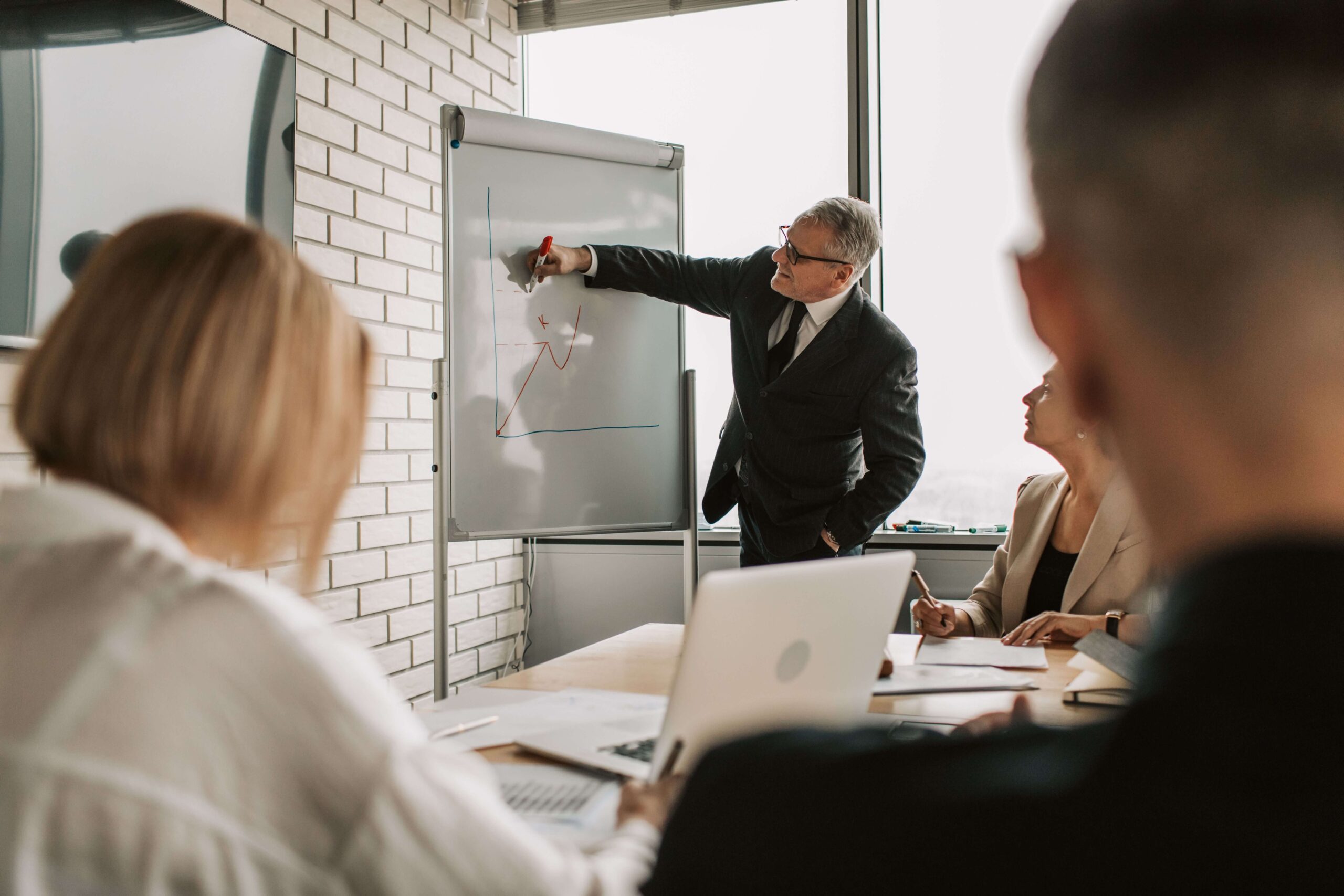

Our CEO & Founder, Tina, offers key insights on how we ensure lasting capability for our training programs.
Last month, I wrote about the Lana Learn Innovation Lab and how we are expanding the ways we design and deliver learning. As we think about new tools, new delivery models, and new ways to reach learners, there is another question that matters just as much: How do we build training programs that continue to deliver value over time?
A successful training program should do more than deliver a course. It should help an organization build stronger people, stronger systems, and a stronger ability to adapt as needs change. At Lana Learn, we increasingly think about training through this lens: not simply as something we deliver, but as a capability we help build and continue to improve alongside our partners.
Start With the Capability, Not the Course
It is easy to measure a training program by what happens during delivery. How many students attended? How many hours of instruction were completed? Did participants finish the curriculum? Did scores improve? Those measures matter. We use them too.
But they are only part of the picture. The more important question is what the program makes possible afterward. Can learners apply what they learned? Can instructors consistently deliver high-quality instruction? Can leaders see where learners are succeeding or struggling? Can the program adjust when mission requirements, technology, or the learner population changes?
Thinking about those questions at the beginning changes how a program is designed. Instead of starting with, “What course should we deliver?” we can start with, “What capability are we trying to build?” That distinction matters.
Build a Strong Foundation
Strong programs need more than good instructors and good curriculum. They also need clear processes, useful data, well-designed assessments, documented standards, and tools that help teams operate consistently. None of those things are particularly exciting on their own. But together, they are what allow a program to grow without losing quality. We have seen this repeatedly in our own work.
An instructor may discover a better way to explain a difficult concept. A program manager may identify a scheduling process that prevents recurring problems. Assessment data may reveal that students are consistently struggling in one area. A local partner may explain why a particular example or activity does not work in their environment. Those lessons should not disappear.
Part of building a strong learning system is capturing what works, turning that knowledge into repeatable practices, and continuing to refine those practices over time. Standards do not mean every classroom or every learner should be treated the same. They create a strong baseline so teams can focus their energy on the places where adaptation actually matters.
Design for Change
Training programs rarely operate in a static environment. People change. Leadership changes. Technology changes. Requirements change. A program that works well today may need to look different a year from now. That is why we believe good training design has to account for change from the beginning.
Curriculum should be updated as needs evolve. Assessments should tell us more than whether someone passed or failed. Data should help leaders understand what is happening across the program. Processes should be clear enough that new team members can step in without rebuilding everything from scratch. The objective is not to create a fixed solution and walk away. It is to create a strong foundation that can continue evolving.
Use Technology to Strengthen the System
This is especially important as training becomes more technology-enabled. Digital platforms, e-learning, data tools, and artificial intelligence can make learning more accessible, personalized, and efficient. We are investing in these capabilities through the Lana Learn Innovation Lab. But technology alone is not the strategy.
A new tool may make one part of a program faster or easier. The bigger question is whether it improves the overall learning system. Does it help instructors teach more effectively? Does it give learners better feedback? Does it give program leaders better information? Does it make high-quality learning easier to deliver at scale? And just as importantly: can the program continue adapting as the technology itself changes? Tools will come and go. The underlying learning capability has to be stronger than any individual platform.
Build With Partners, Not Around Them
One of the most important lessons we have learned is that sustainable programs are built with the people who will use them. That means listening carefully to instructors, learners, managers, local partners, and program leaders. The people closest to the work often see things that are difficult to identify from a program plan or dashboard. They know where students get stuck. They know which processes create unnecessary friction. They know what works in the classroom and what looks good on paper but does not translate into practice. Those insights matter.
Our role is not simply to bring in an outside solution. It is to combine our experience in learning design, program operations, technology, and instruction with the knowledge our partners already have. That is how better systems get built.
The Work Does Not End at Launch
There is a tendency to think of program launch as the finish line. We see it differently. Launch is when you begin learning what the program really needs. Once learners arrive, instructors begin teaching, assessments generate data, and real-world constraints appear, you have much better information about where improvements can be made. That is where an experienced training partner can continue adding value.
The work becomes less about standing up a program and more about improving it: refining curriculum, supporting instructors, analyzing performance, introducing new tools where they make sense, and helping the program respond to changing requirements. The strongest programs are not static. They improve.
Looking Ahead
At Lana Learn, our work will always begin with learners. We want people to leave our programs with greater knowledge, stronger skills, and more opportunities than they had when they entered. But increasingly, we are also thinking about everything around the learner. The instructors. The curriculum. The assessments. The technology. The data. The processes. The leaders responsible for the program. And the systems that connect all of those pieces together.
Our goal is to help our partners build learning capabilities that are strong enough to endure and flexible enough to evolve. And then to keep working alongside them as their people, technology, and mission requirements change. That is the kind of partnership we want to build.