
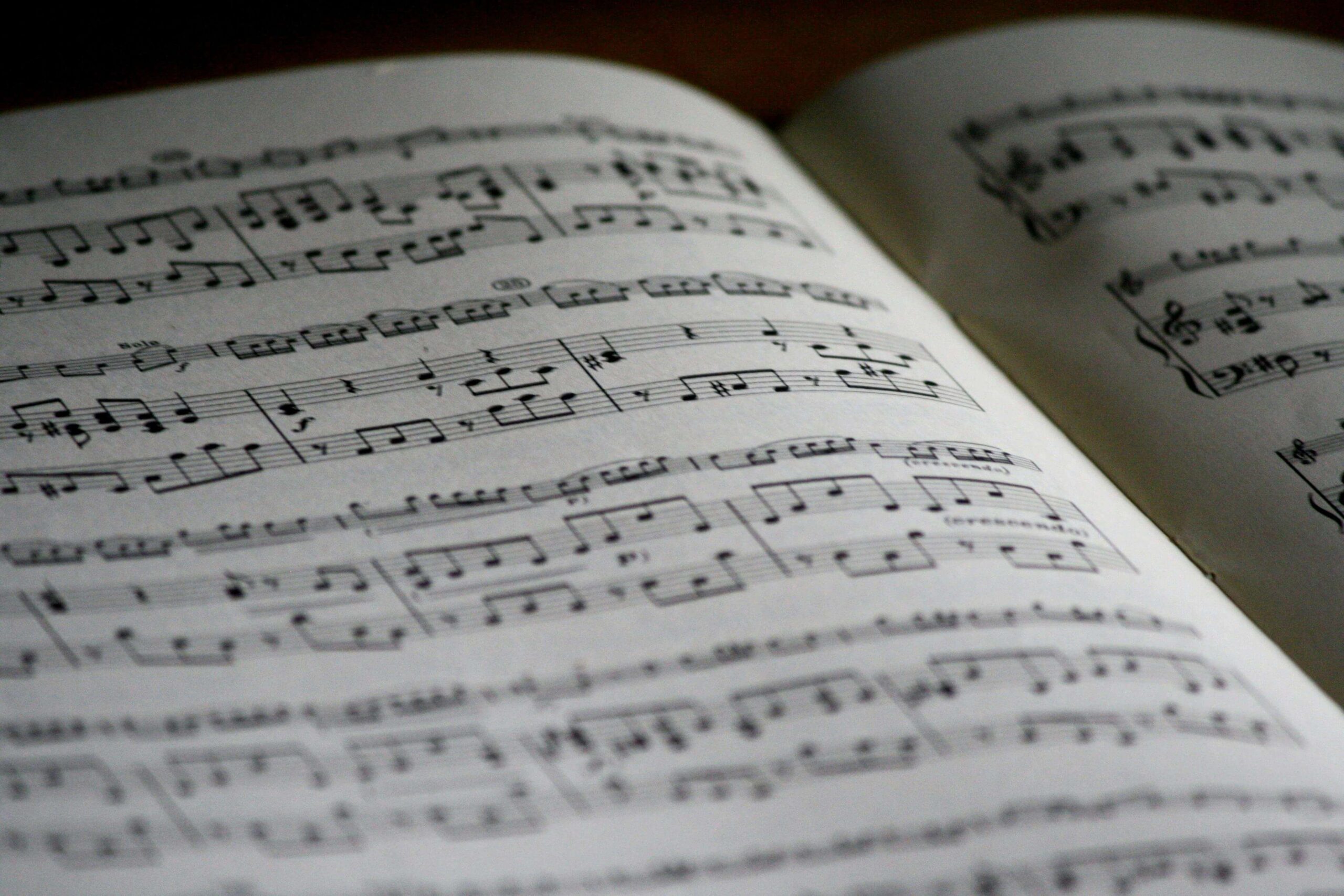

Our Unit 871 ESL Instructor, Amanda, discusses how teachers can use music to boost English learning outcomes.
Have you ever noticed how a song stays stuck in your head long after a grammar lesson fades? For ESL (English as a Second Language) learners, music isn’t just entertainment—it’s a biological hack for prosody: the rhythm, stress, and intonation that make English sound natural.
When we speak English, we don’t give every word equal weight. We emphasize “content” words and “reduce” others. Music mirrors this perfectly, making it the ultimate tool for moving beyond “robotic” speech toward true fluidity.
Why Music is an ESL Superpower
- Breaking the “Staccato” Habit: Many ESL learners speak with syllable-timed rhythm (giving every syllable equal length). English is stress-timed. Songs force learners to stretch some vowels and squeeze others to stay on beat.
- The “Earworm” Effect: Music creates “hooks” in the brain. A catchy chorus encodes complex grammar—like the conditional “If I were…”—without the need for tedious drills.
- Lowering Anxiety: Language learning can be intimidating. Music lowers the “Affective Filter,” allowing students to experiment with sounds without the fear of being “wrong.”
3 Specific Techniques for the Classroom
1. The “Ghosting” Method
Instead of just singing along, have students “ghost” the artist.
- The Task: Students whisper the lyrics just a split second behind the singer.
- The Benefit: This forces them to mimic the singer’s linking (how “rock and roll” becomes “rock-un-roll”) and reductions (how “going to” becomes “gonna”). It builds the muscle memory needed for fast-paced conversation.
2. Pronunciation “Jazz Chants”
Popularized by Carolyn Graham, jazz chants use the natural rhythms of spoken English.
- The Task: Take a common phrase, like “What do you want to do?” and set it to a 4/4 beat.
- The Benefit: Students learn that in natural English, “What do you” often shrinks into a quick “Whatcha.” Tapping out the beat ensures they don’t lose the rhythm.
3. The “Chorus Substitution”
- The Task: Take a simple pop song and have students rewrite the chorus using their own life experiences, keeping the same number of syllables.
- The Benefit: This bridges the gap between passive listening and active production. It requires students to think about syllable counts and word stress to make their lyrics “fit” the melody.
Teacher’s Choice: Selecting the Right Track
For ESL fluidity, clarity is king. While Rap is great for advanced learners, it’s often too fast for building foundational flow. Opt for:
- The Beatles or Disney Soundtracks: Clear enunciation and predictable rhythms.
- Soft Pop/Folk: These genres emphasize vowels, helping students master those tricky English vowel shifts.
Bottom line: If you want your students to speak with more “flow,” stop focusing on the rules and start focusing on the rhythm.