
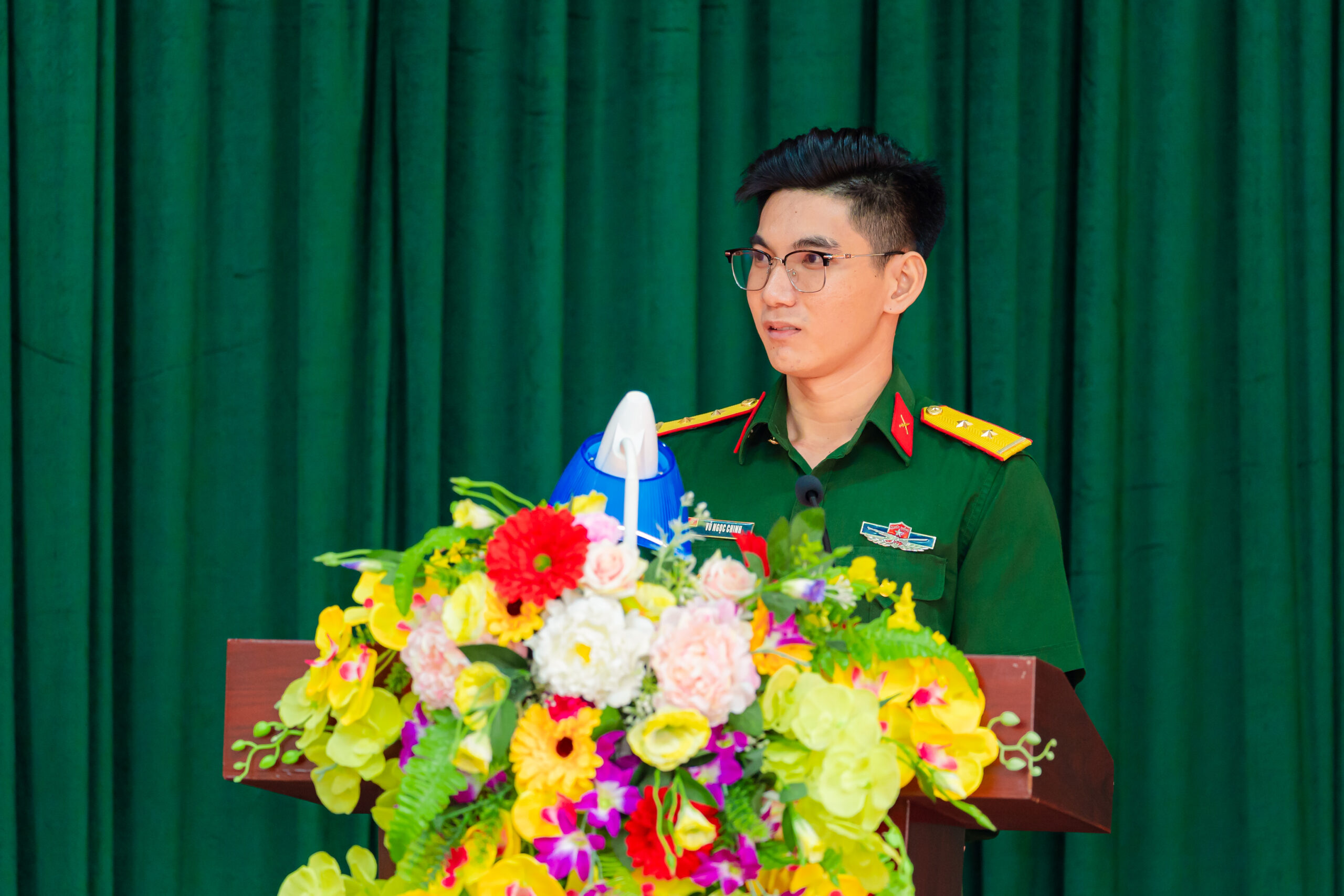

Our ESL Instructor, Jai, remarks on how he is using cutting-edge strategies to help his students build speaking confidence.
Speaking English in front of others is stressful for many learners. In military classrooms, pressure can feel even higher. Learners worry about rank, image, and test results. Research shows that speaking anxiety is one of the biggest barriers to language performance (Ohio State Linguistics).
Understand the Role of Anxiety and Confidence
Foreign language anxiety strongly affects willingness to speak (Ohio State Linguistics). Learners often fear mistakes and negative judgments from peers or superiors. Studies on English speaking self-efficacy show a clear pattern. Students who believe they can speak well usually perform better in speaking tasks (Frontiers). Confidence is not just a feeling. It is a powerful predictor of actual performance.
Create a Low-Risk Speaking Environment
Research links lower classroom anxiety with more frequent oral participation (Ohio State Linguistics). Instructors can reduce risk by normalizing errors as part of learning. Simple statements help, such as “Mistakes are information, not failure.” Clear routines also reduce stress. Learners feel safer when they know when and how they will speak. For example, use a repeated pattern: think alone, practice with a partner, then share with the class. This “private before public” structure gives learners rehearsal time and reduces fear (Dean & Francis Press).
Use Task-Based, Interaction-Rich Activities
Speaking confidence grows through meaningful interaction, not only drills. The interaction hypothesis argues that communication tasks help learners notice gaps in their language and improve through feedback (Wikipedia). Task-based language teaching (TBLT) is especially effective for speaking. Studies show that structured tasks, such as problem-solving or military role plays, improve fluency and confidence over time (ResearchGate). For military officers, tasks can mirror real contexts. Examples include briefing a team, negotiating a joint exercise, or reporting an incident. These tasks link English to real duties, which increases motivation. Repeating tasks with small variations also helps. Research on task repetition shows gains in fluency and control of language (HCMUE Journal of Science). Learners speak more smoothly each time, which builds confidence.
Strengthen Self-Efficacy Through Feedback and Reflection
Recent studies highlight the connection between growth mindset, self-efficacy, and speaking performance (ScienceDirect). Teachers can shape beliefs by the way they give feedback. Effective feedback is specific and focused on behavior, not identity. Instead of “Your speaking is weak,” say “Your message was clear; now let’s improve your past tense endings.” Small, concrete goals make progress visible. Learners can also use positive self-talk. Research on EFL learners shows that guided self-talk reduces anxiety and increases speaking confidence (Tel Journal). Short statements like “I can communicate my idea” can be practiced before speaking tasks.
Conclusion
Speaking confidence does not appear by itself. It grows when anxiety is managed, tasks are meaningful, and feedback is supportive. In military classrooms, these strategies respect rank and discipline while still protecting psychological safety. By designing interaction-rich tasks, normalizing mistakes, and strengthening self-belief, instructors help officers use English with greater confidence—both in class and on mission.
References
- Derakhshan, A. et al. (2024) ‘Growth mindset, self-efficacy, and self-regulation in L2 speaking’, System. Available at: https://www.sciencedirect.com/science/article/pii/S0346251X24001027
- El-hadi Abd El-atti, A. (2019) ‘Using Task Based Learning to Develop EFL Speaking Skills’, International Journal of…. Available at: https://journals.ekb.eg/article_61543_e8b8de8ceec73e9190eca08b95626e9c.pdf
- Horwitz, E.K., Horwitz, M.B. and Cope, J. (1986) ‘Foreign language classroom anxiety’, The Modern Language Journal, 70(2), pp. 125–132. Available at: https://onlinelibrary.wiley.com/doi/10.1111/j.1540-4781.1986.tb05256.x
- Long, M.H. (1996) ‘The role of the linguistic environment in second language acquisition’, in Ritchie, W.C. and Bhatia, T.K. (eds) Handbook of second language acquisition. San Diego: Academic Press, pp. 413–468. Summary available at: https://www.deanfrancispress.com/index.php/al/article/download/648/AL001092.pdf
- Luu, T.M.V. (2024) ‘Identifying sources of English-speaking self-efficacy among Vietnamese learners’, AsiaCALL Online Journal, 15(1), pp. 103–121. Available at: https://asiacall-acoj.org/index.php/journal/article/download/67/35/993
- Ma, Y. and Xu, Z. (2022) ‘The triarchy of L2 learners’ emotion, cognition, and motivation’, Frontiers in Psychology, 13, 1002492. Available at: https://www.frontiersin.org/articles/10.3389/fpsyg.2022.1002492
- Ngọc, B.T.B. (2025) ‘Task-based language teaching and speaking development’, Ho Chi Minh City University of Education Journal of Science. Available at: https://journal.hcmue.edu.vn/index.php/hcmuejos/article/view/4813
- Yalçın, Ö. and İnceçay, V. (2014) ‘Foreign language speaking anxiety: The case of spontaneous speaking activities’, Procedia – Social and Behavioral Sciences, 116, pp. 2620–2624. Available at: https://www.sciencedirect.com/science/article/pii/S1877042814006405