Our Unit 871 Team Lead, Emile, remarks on key insights from his recent professional development on rethinking learning environments.
Earlier this year, I enrolled in Leaders of Learning, as part of Lana Learn’s Professional development program, a course offered by HarvardX and led by the late Professor Richard Elmore. The course explores how learning environments are shaped by our beliefs about learning and leadership. It challenges educators to define their own learning theories and examine how those theories influence the way they teach. Rethinking learning environments can enhance one’s awareness of how they instruct their students.
Leadership Assessment
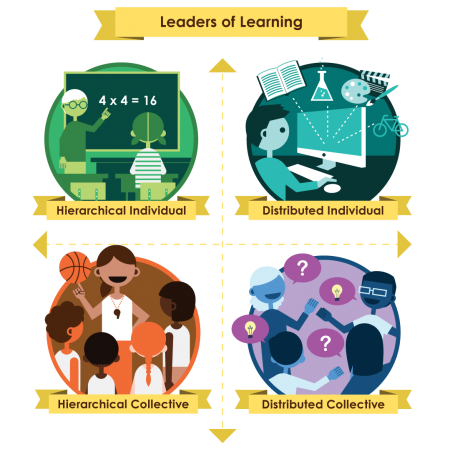
One of the first activities was a quadrant-based assessment. It placed me in the Distributed Individual quadrant, where learning is self-directed, flexible, and often supported by digital tools. At first, I thought, “That doesn’t apply to me.” After all, I teach English to Vietnamese military officers on a base with a clear hierarchy and standardized goals.
But as I reflected, I realized something important: the quadrant isn’t about where you teach, it’s about how you structure learning.
At Unit 871 we already use many strategies aligned with the Distributed Individual model. For example, we offer Computer-Based Training (CBT) sessions. These allow students to focus on areas they feel need improvement. Instructors also share extra practice through Quizizz, helping students reinforce vocabulary at their own pace.
We encourage students to set SMART goals and reflect on their learning and career paths. This builds ownership and helps them track their progress. In class, we provide choice within structure. Through role plays and scene acting, students apply English in real-life scenarios that align with their interests or duties.
Our peer-to-peer study groups are another example. Stronger students support their peers using a Socratic approach, guiding rather than giving answers. This fosters both independence and collaboration. And with tools like Quizlet, students can review content anytime, anywhere.
So yes, we operate in a structured, collective environment. But within that, we’ve created space for learner-driven growth. As Professor Elmore said,
“The future of learning is not about schools. It’s about learning in all the places and spaces where it occurs.” (Richard Elmore, Leaders of Learning)
This course helped me see that even in a military setting, we can design learning environments that empower individuals. It’s not about changing the system, it’s about working within it to create meaningful learning experiences.